Hand tools and
Fabrication
Kinetic sculpture is a dynamic form of art that incorporates movement into its design, often powered by wind, motors, or human interaction. These sculptures engage viewers through their motion, creating a sense of rhythm, balance, and harmony. Artists utilize various materials and techniques to bring their creations to life, blurring the lines between art, engineering, and performance. From Alexander Calder's mobiles to Theo Jansen's Strandbeests, kinetic sculpture continues to captivate audiences with its mesmerizing and ever-changing displays of movement and form. .
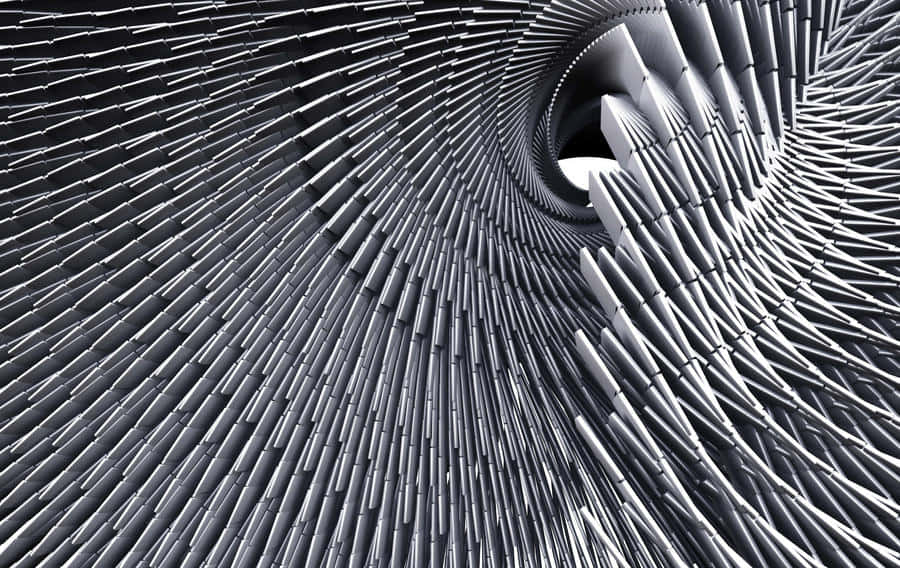
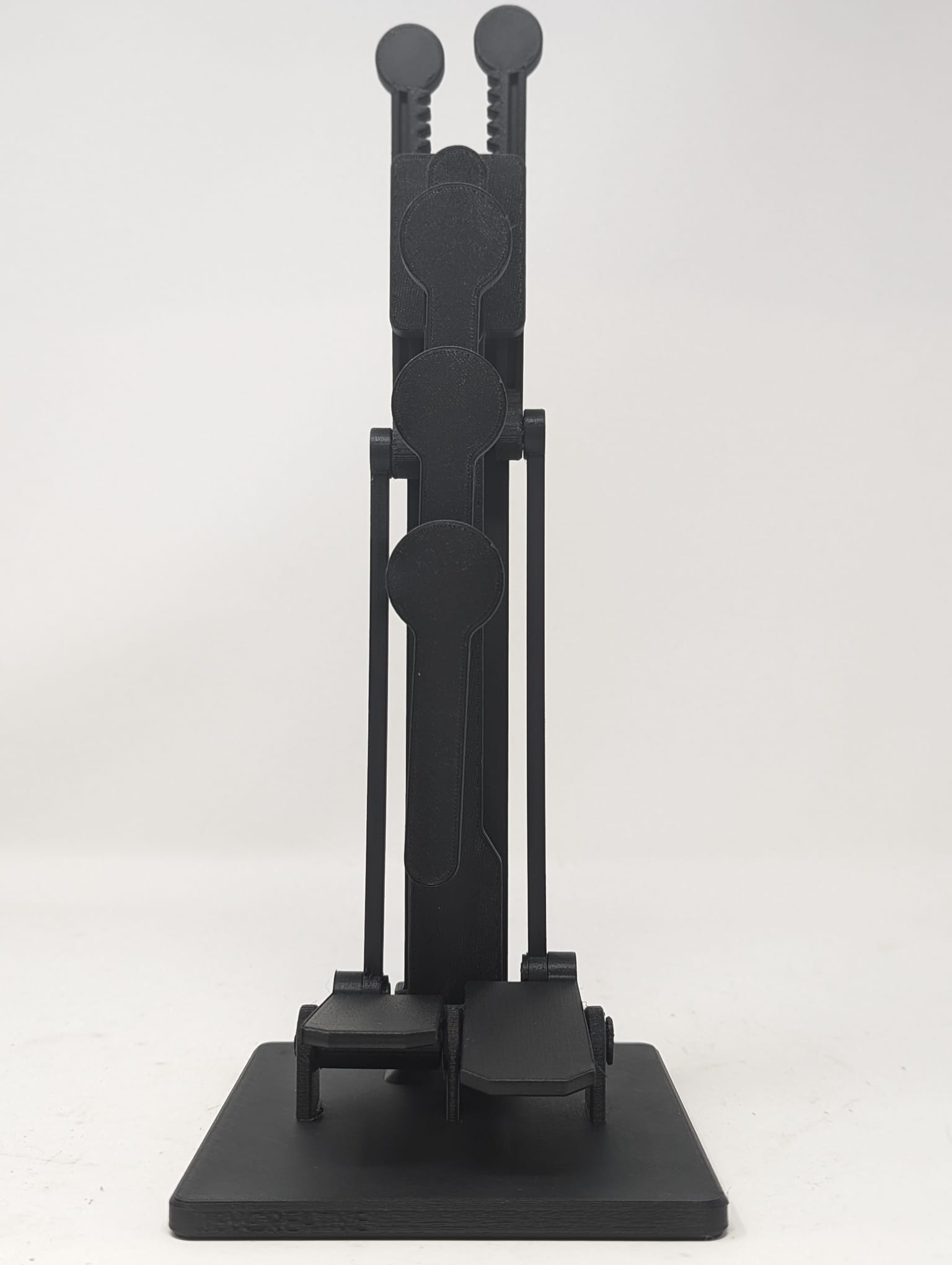
As an avid enthusiast of physics, I've always been fascinated by the intricate beauty of chaos theory. Its exploration of complex systems and the underlying order within apparent randomness captivates my imagination. With a passion for both physics and creative expression, I've embarked on a journey to marry these interests through the creation of a kinetic sculpture. By harnessing the power of 3D printing technology, I aim to materialize the abstract concepts of chaos theory into tangible, dynamic forms. This project not only serves as a homage to the elegance of chaos theory but also as a testament to the boundless possibilities when art and science converge
Choas Theory
Chaos theory, epitomized by the Three Pendulum Problem, challenges conventional notions of predictability and determinism within dynamic systems. Unlike linear systems where inputs directly correlate with outputs, nonlinear systems exhibit sensitive dependence on initial conditions, giving rise to intricate behaviors that appear random yet possess underlying order. In the case of the Three Pendulum Problem, subtle variations in the pendulums' initial positions or velocities cascade into divergent trajectories, creating a mesmerizing dance of motion that defies straightforward prediction. This unpredictability, inherent in chaotic systems, underscores the profound complexity and interconnectedness embedded within natural phenomena, inviting exploration into the delicate balance between order and chaos.
The Three Pendulum Problem serves as a compelling example of chaos theory's fundamental principles, elucidating the concept of deterministic chaos within dynamic systems. Despite adhering to deterministic laws, chaotic systems exhibit behavior that appears stochastic, characterized by sensitivity to initial conditions and non-repeating trajectories. Each pendulum's motion, influenced by gravitational forces and interpendulum interactions, unfolds in a seemingly unpredictable manner, defying traditional linear models of motion. Through the lens of chaos theory, this intricate interplay between deterministic dynamics and apparent randomness unveils the rich tapestry of complexity inherent in natural processes, offering profound insights into the emergent behaviors that shape our world.
Chaos theory, exemplified by the Three Pendulum Problem, delves into the exploration of complex systems characterized by sensitivity to initial conditions and nonlinear dynamics. In this paradigm, the motion of interconnected pendulums illustrates the phenomenon of deterministic chaos, where small changes in initial parameters lead to dramatically divergent outcomes. Despite obeying deterministic laws, the system's behavior exhibits a level of unpredictability that transcends traditional notions of order and randomness. By unraveling the underlying patterns within seemingly chaotic systems, chaos theory unveils the intricate interplay between deterministic processes and emergent behaviors, shedding light on the underlying order that governs seemingly disordered phenomena.
Design
After finalizing my decision to base my kinetic sculpture on chaos theory, I delved into online research to explore existing designs and concepts that could inform my project. The internet proved to be a treasure trove of inspiration, offering a myriad of diverse designs and approaches to kinetic art. Excited by the possibilities, I embarked on a journey of exploration, immersing myself in the world of 3D modeling and fabrication
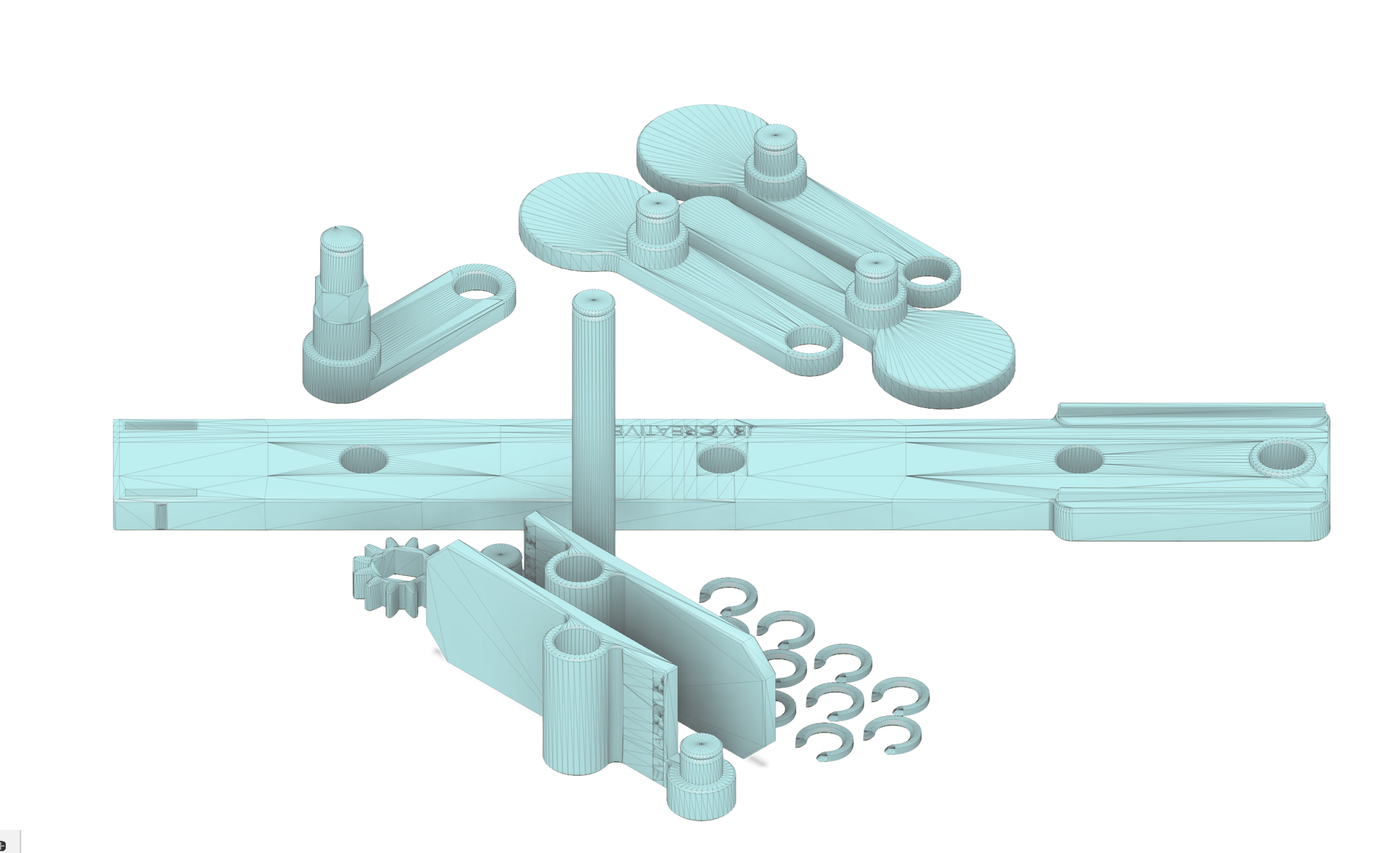
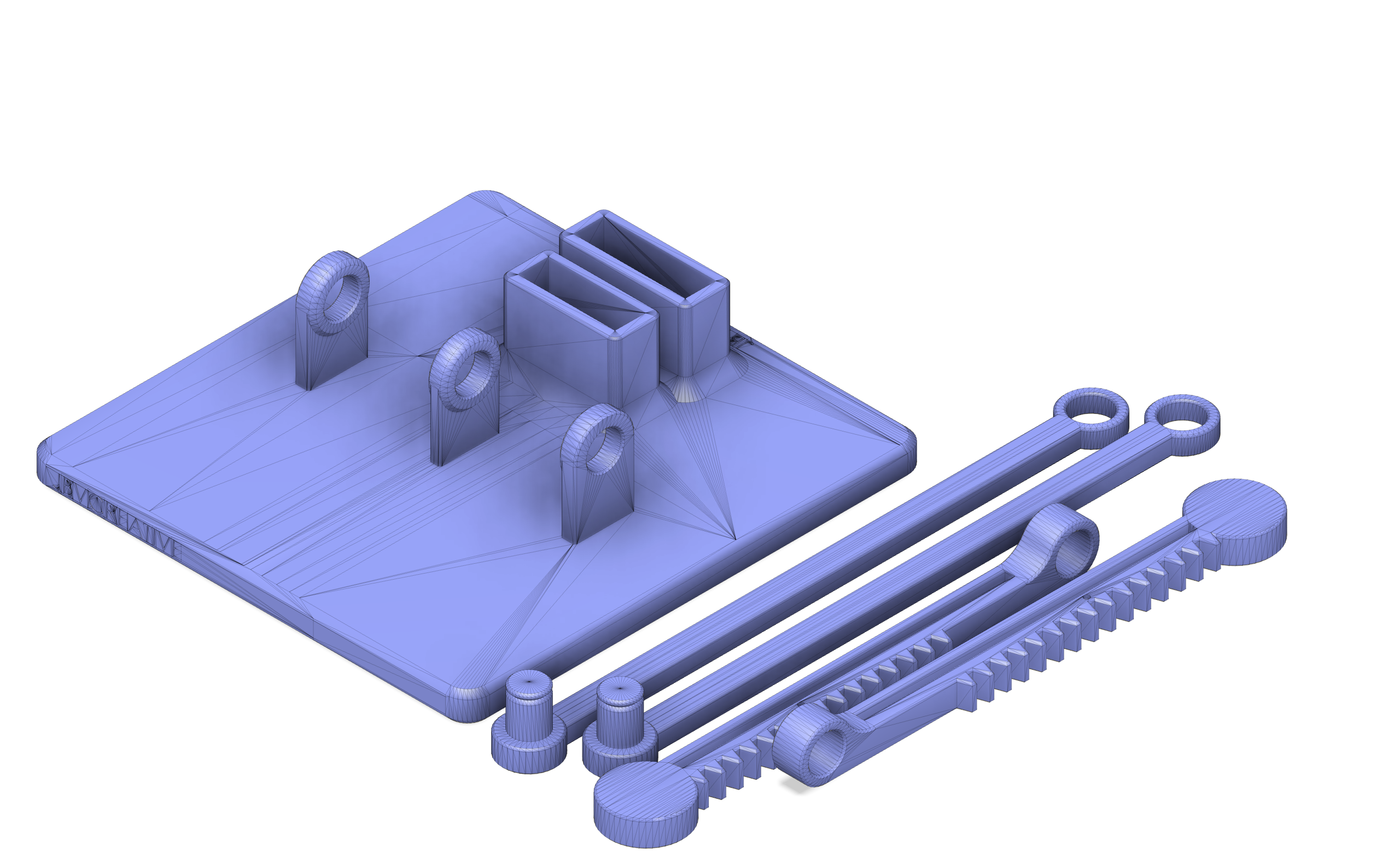
Drawing upon my knowledge of software like Fusion 360, I began to reimagine and recreate various components and mechanisms, tailoring them to embody the principles of chaos theory. This process not only fueled my creativity but also allowed me to infuse my unique perspective and understanding of physics into the design, transforming abstract concepts into tangible forms. With each iteration and refinement, my vision for the kinetic sculpture took shape, guided by a passion for both art and science, and a commitment to bringing the captivating complexities of chaos theory to life in a dynamic and engaging way.
3d printing
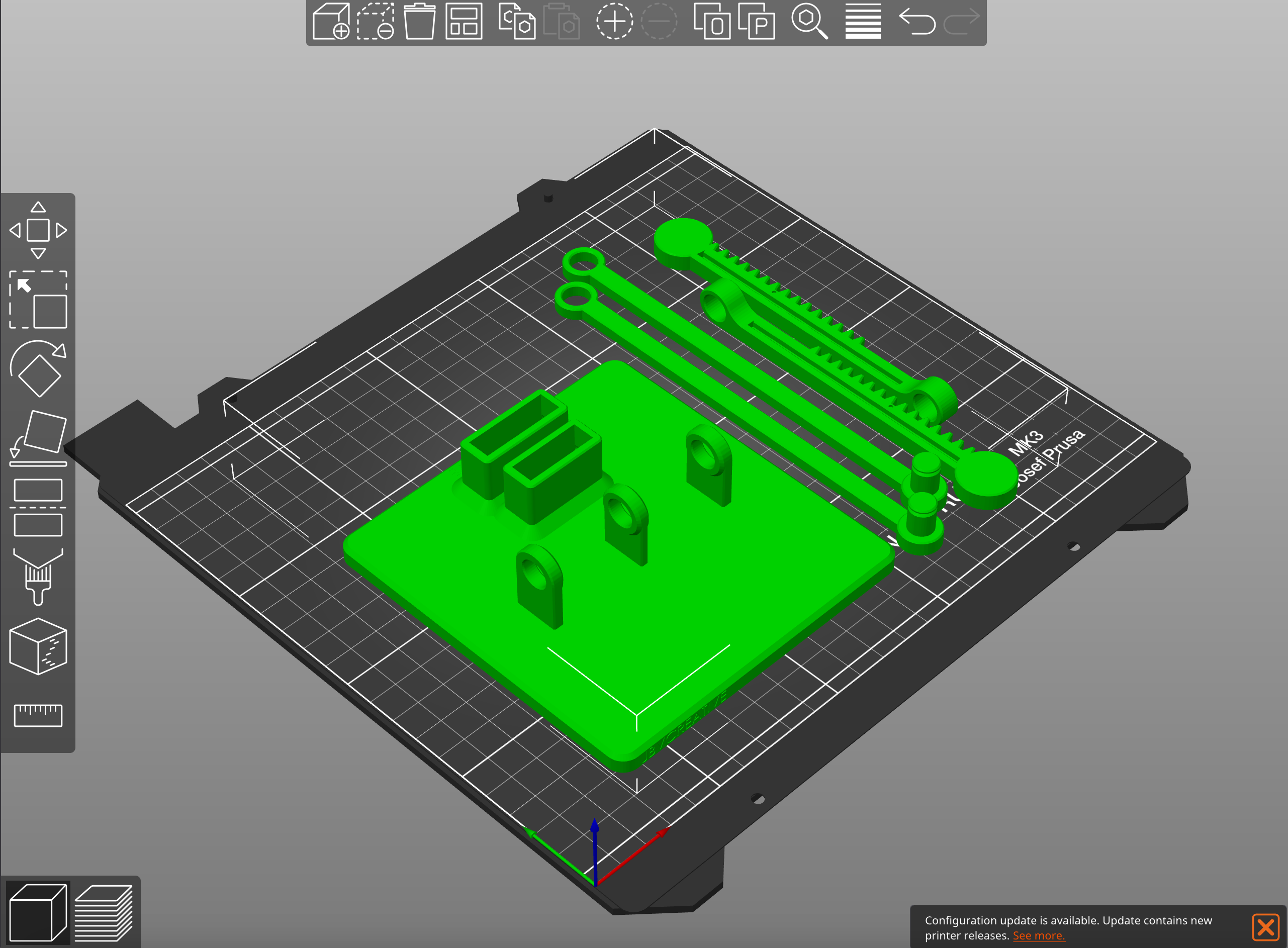
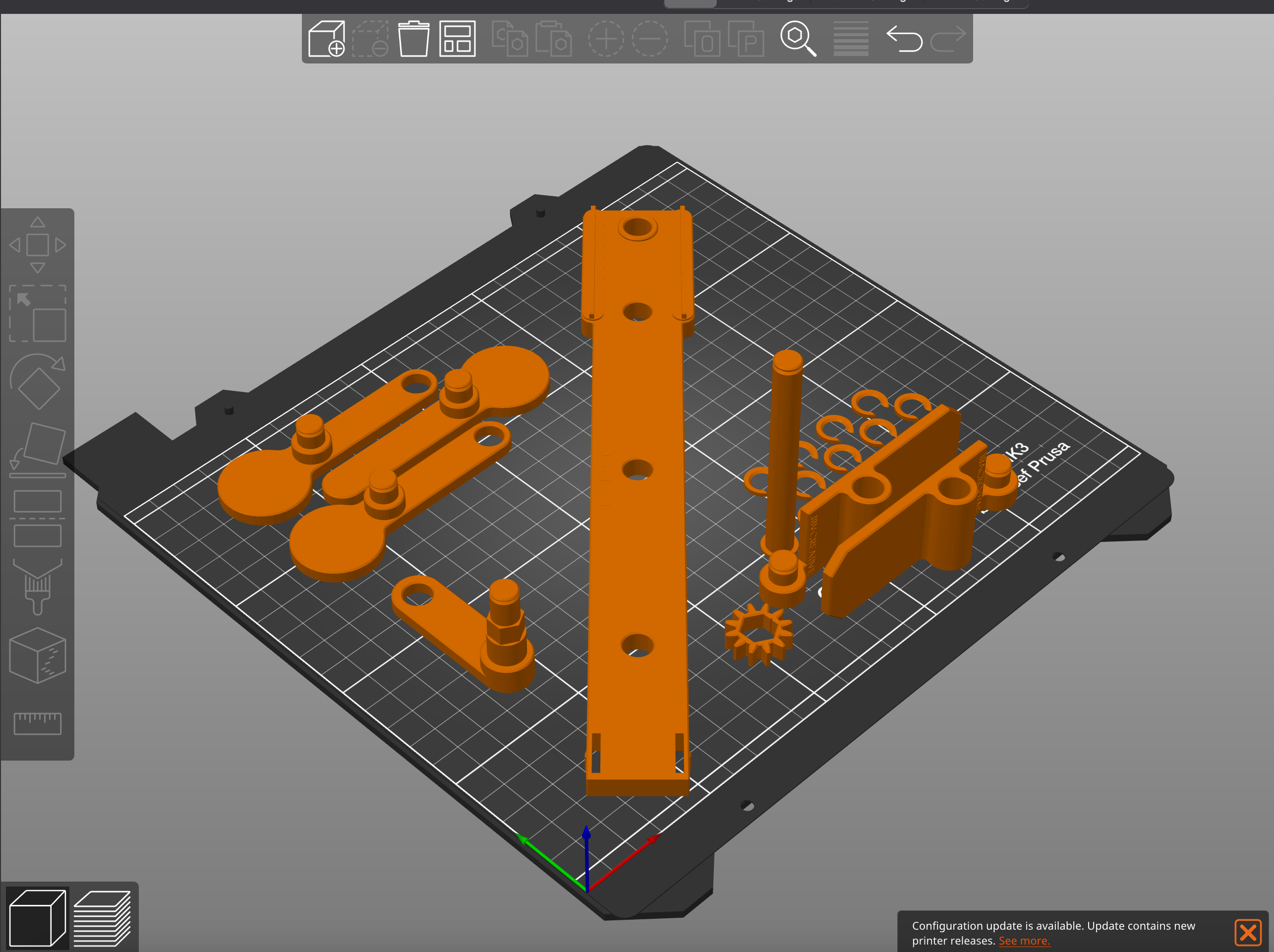
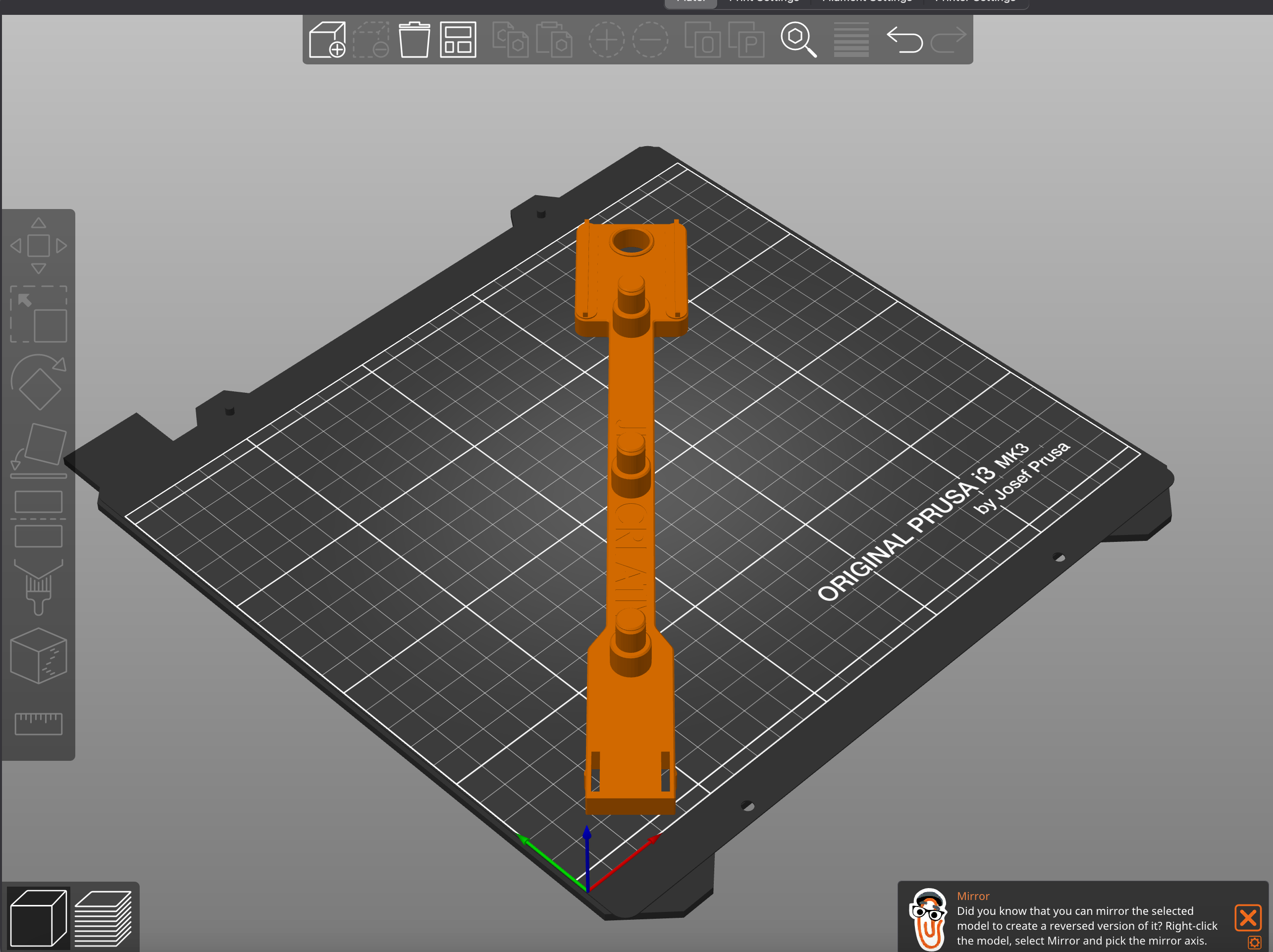
The process of 3D printing the components for my kinetic sculpture began with meticulous planning and preparation. After finalizing the designs using software like Fusion 360, I ensured that the models were optimized for 3D printing, taking into account factors such as print orientation, support structures, and material considerations.
Once the designs were ready, I transferred them to slicing software, where I fine-tuned settings such as layer height, infill density, and print speed to achieve optimal results. With the parameters set, I generated the toolpaths and converted the digital models into instructions that the 3D printer could understand.
Next, I selected the appropriate filament material based on the desired properties and aesthetics of the final components. Whether it was PLA for its ease of printing and vibrant colors, or ABS for its durability and heat resistance, I ensured that the chosen material aligned with the requirements of each part.
With the printer calibrated and filament loaded, I initiated the printing process, monitoring the progress to ensure proper adhesion and dimensional accuracy. Depending on the complexity and size of the components, printing times varied, ranging from hours to days for larger pieces.
Upon completion, I carefully removed the printed parts from the build platform, paying attention to delicate features and support structures. Post-processing steps such as sanding, smoothing, or painting were employed as needed to enhance the surface finish and visual appeal of the components.
Finally, with all the printed parts assembled and integrated into the kinetic sculpture, I marveled at the realization of my vision—a harmonious fusion of art, science, and technology brought to life through the intricate process of 3D printing.
Final Output